
Palletized or Floor-Loaded? Preparing Your FBA Shipment for Amazon's Dock
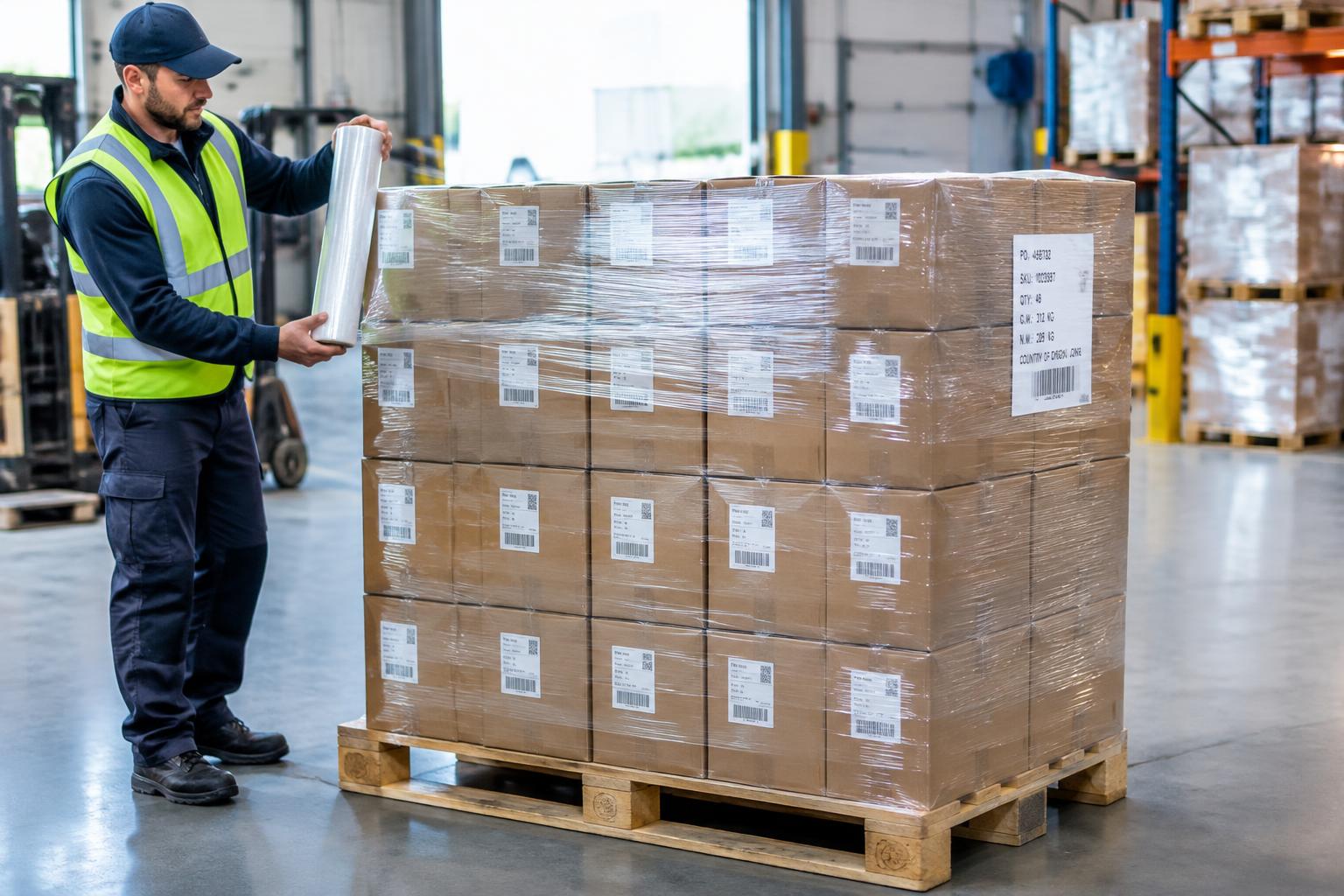
Palletized and floor-loaded are two different ways your FBA shipment can arrive at an Amazon fulfillment center — not two names for the same thing. Confirming the right one before your goods leave China prevents refused deliveries and last-minute rework at the U.S. warehouse.
Two delivery methods, one decision to confirm early
A palletized shipment arrives with cartons stacked on pallets and secured so each pallet moves as one unit. A floor-loaded shipment arrives with cartons loose, unloaded one by one.
Which method applies is set when the shipment is created, so confirm it before the goods leave China — not after they reach the U.S. Amazon's shipment guidance and receiving requirements are updated from time to time, so always check the current instructions on your shipment in Seller Central and align the plan with your forwarder before anything is packed.

Which method fits your shipment
Palletized delivery suits shipments where many cartons go to the same fulfillment center and the cartons are uniform enough to stack safely. Unloading is generally faster at the receiving dock, because a whole pallet moves at once instead of one carton at a time.
Floor-loaded delivery can suit smaller or mixed shipments where palletizing would add handling without adding benefit — and it is the right choice whenever the receiving instructions for your destination specify floor loading. If you are unsure, ask before you pack; the answer depends on the specific fulfillment center and your shipment plan.
Three preparation points that matter
Whichever method applies, three preparation points decide how smoothly your freight is received:
- Consistency. Cartons on the same pallet should stack cleanly, with the same orientation where possible, and without overhang beyond the pallet edge. A pallet that is uneven, leaning or overhanging is harder to move safely — and harder to receive.
- Labels stay visible and scannable. Pallet labels, carton labels and shipping marks must match, and the pallet label must not be covered by wrap or by another carton. If the receiving team cannot scan the pallet, it cannot be checked in smoothly, even if the goods inside are correct.
- Secure the load without hiding it. Wrapping or strapping should hold the cartons in place during transport without covering the labels the receiving team needs to see. A pallet that arrives collapsed, or with cartons shifted, creates rework before check-in even begins.
The decision follows the whole chain, not just the last mile
If a shipment is created as palletized, the forwarder's U.S. warehouse needs to build those pallets before delivery, with the right carton grouping for each fulfillment center. If it is created as floor-loaded, the cartons travel and unload differently.
Changing the method after the goods are already in the U.S. means rebuilding the load at the destination — extra handling, extra time and extra cost. It is avoidable with one confirmation while the goods are still at the factory.
Before your goods leave China
- Check which delivery method your shipment was created with in Seller Central.
- Confirm the method and any destination-specific receiving instructions with your forwarder.
- If palletized: check pallet condition, stack without overhang, keep labels scannable, secure the wrap without covering labels.
- If floor-loaded: confirm the carton count and weights on your documents match what is actually loaded.
In short: confirm palletized or floor-loaded when you create the shipment. Keep cartons on a pallet uniform, stable and label-visible. And make sure the method on your shipment matches the load that actually arrives at the dock.
For a complete pre-dispatch checklist, read our FBA truck delivery refusal guide.
Amazon's pallet and delivery requirements change from time to time, so confirm the current version in Seller Central and with your forwarder before you ship. Start a Linktrans booking when you are ready and enter your cartons; we will plan the delivery method with you.