
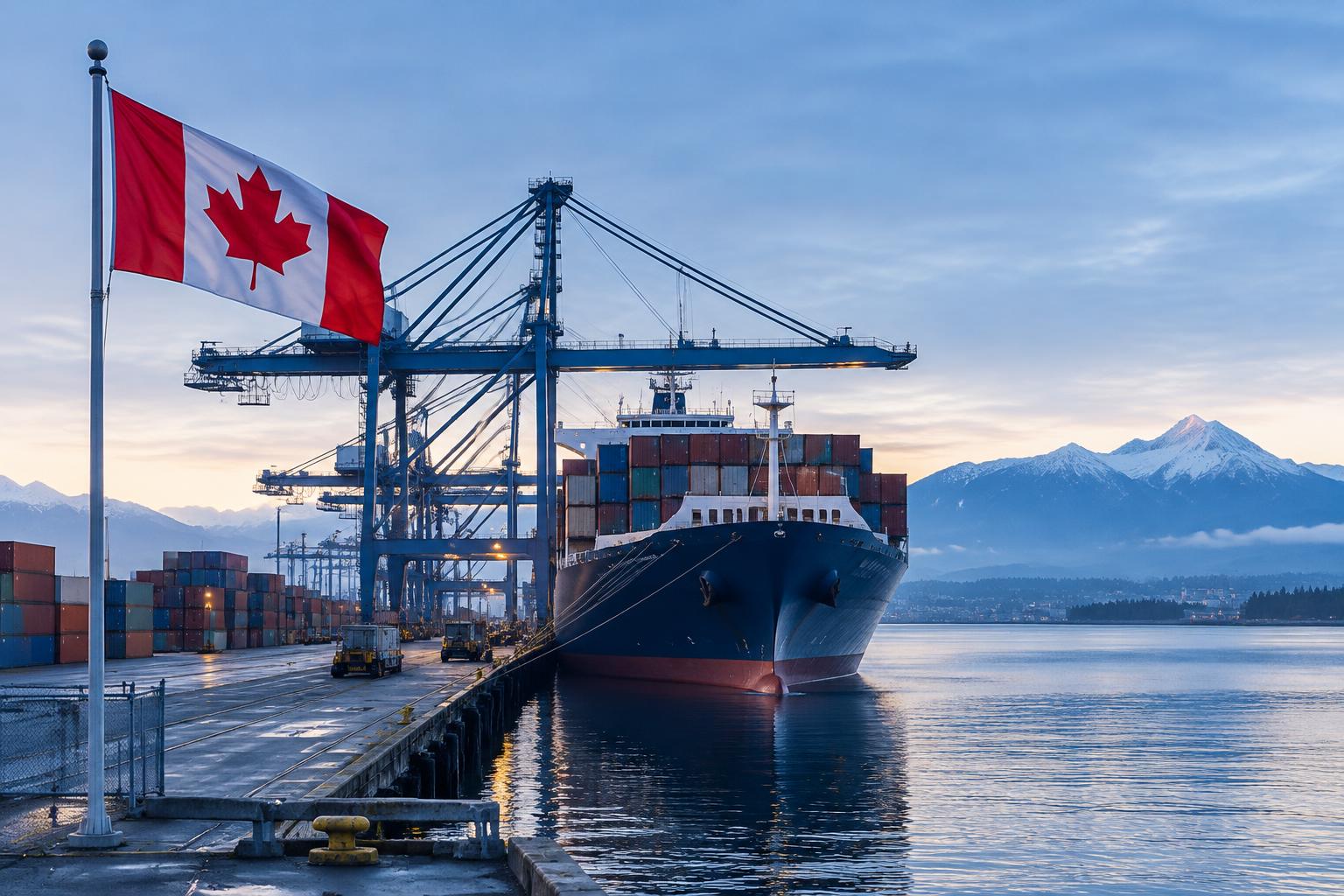
Shipping from China to Amazon FBA in Canada is not the same as booking a general ocean shipment to a Canadian port. The forwarder has to collect or receive your cargo in China, arrange import customs in Canada, and deliver cartons to the fulfillment center on your Amazon inbound plan.
This is a practical checklist for Amazon.ca sellers comparing freight forwarders, not a ranked list of providers. For current service options and online LCL ocean prices, see the Canada shipping page. For a general question, contact Linktrans. For U.S. FBA shipments, see the China-to-U.S. forwarder checklist.
Start with the shipment you actually have
Write down the origin in China, carton count, dimensions and weight, the Amazon.ca fulfillment center on your inbound plan, and whether you need factory pickup or a drop-off at the origin warehouse. Then ask each forwarder:
- Do you pick up from my supplier in China, or do I deliver the cargo to your origin warehouse?
- Who handles export formalities in China, and what documents does the supplier need to provide?
- Who will be named as importer of record on the Canadian customs accounting documents, and do you handle Canadian clearance yourselves or through a third-party broker?
- Is the quote DDU or DDP, and which charges are included?
- Do you deliver to the Amazon fulfillment center on my inbound plan, or only to a port or local warehouse?
- How do you check that the FBA label, shipping mark, and pallet label all show the same facility code?
Compare these answers alongside the price, not after it.
Pickup and handoff in China
Confirm who is responsible for collection, carton count, and label condition before the cargo is loaded. If your supplier will drop off the goods, confirm the receiving location, the cutoff, and what happens if cartons arrive short or unlabeled. Ask the forwarder to state in writing when responsibility transfers. Keep the commercial invoice, packing list, and carton marks consistent with the shipment in Seller Central.
Customs responsibility in Canada
CBSA uses the term "importer of record" for the importer listed at the time of accounting. The notes below summarize what official Canadian government pages say about that party. They are general information, not legal advice.
According to the Canada Border Services Agency (CBSA), the importer listed at the time of accounting is called the importer of record. CBSA describes that named party as responsible for paying duties and taxes owed, as the main contact for verifications, and as directly responsible for post-accounting obligations, including record keeping, corrections, and payment of duties. CBSA also says that if a customs broker is identified as the importer at the time of accounting, the broker is jointly responsible with the importer for duties and taxes owing.
CBSA also states that commercial importers need a CARM Client Portal account, a business number, and an import program (RM) account. According to CBSA, non-resident importers must obtain a business number from the Canada Revenue Agency (CRA) before registering in CARM. Whether a given seller needs those accounts depends on how the shipment is set up.
Linktrans has a self-operated, Chinese-staffed customs brokerage in Canada. Before you book, confirm with Linktrans who will be named as importer of record for your shipment, whether you need your own business number and CARM account, and who is contacted if CBSA later reassesses the entry. These points are confirmed per shipment when you request a quote. Do not assume that choosing DDP answers those questions.
DDU and DDP are different billing methods
On Linktrans shipments, DDU means duties and related charges are billed at actual cost. DDP is one all-in price with duties and taxes built in. For Canada, customs arrangements are confirmed per shipment when you request a quote.
A DDP price includes duties and taxes, but it does not automatically transfer every importer obligation, such as record keeping or post-entry corrections. According to the CRA, goods imported into Canada are generally subject to the GST or the federal part of the HST at importation, and the owner or importer of record is responsible for paying that tax. Online prices currently shown on the Canada shipping page are ocean freight only; duties and taxes are not included in those figures.
Labels, packing, and facility checks
Use the ship-to address and FBA labels generated for the current inbound plan in Seller Central. Do not reuse an old facility code from a previous shipment. Linktrans checks that every carton's FBA label, shipping mark, and pallet label carry the same Amazon facility code before pickup or drop-off. If the destination changes after labeling, regenerate the labels and marks rather than crossing out the old code. Also check carton count and the SKU and quantity in each carton. Amazon's Canada FBA quick-start guidance says each box and pallet must carry an FBA shipping label, and that labels should not be placed on a corner, edge, or box seam. A packing list that does not match the labeled cartons can delay receiving.
Get a quote or ask a question
If you already have carton details and a Canada inbound plan, compare options on the Canada shipping page. To discuss pickup, customs, or labeling before you book, contact Linktrans.
Frequently asked questions
Answers to common questions about forwarder selection, DDU and DDP, importer of record, and FBA labels for Canada.
What should I check before choosing a China-to-Canada FBA freight forwarder?
Confirm pickup or drop-off, who is importer of record and who handles Canadian clearance, whether the quote is DDU or DDP and what it includes, and whether delivery is to the fulfillment center on your inbound plan. Check that all three labels use the same facility code.
What is the difference between DDU and DDP?
DDU bills duties and related charges at actual cost. DDP is one all-in price with duties and taxes built in. Canada customs arrangements are confirmed per shipment. Choosing DDP does not automatically settle every importer obligation.
Who is the importer of record for a China-to-Canada FBA shipment?
Linktrans has a self-operated customs brokerage in Canada and confirms the importer-of-record arrangement per shipment when you request a quote, including whether you need your own business number and CARM account. Official CBSA and CRA pages describe the responsibilities of the named importer of record.
What should I check on FBA labels for Canada?
Use the labels and ship-to address from the current inbound plan. The FBA label, shipping mark, and pallet label must show the same Amazon facility code. If the destination changes, regenerate the labels instead of altering the old code.
Official references
Requirements can change and may depend on how your shipment is set up. Check the current official pages and your Seller Central instructions before you ship. The following resources were reviewed for this article:
- CBSA — Set up your business to import
Covers CARM Client Portal registration, business numbers, import program (RM) accounts, non-resident importers, and customs brokers.
- CBSA Memorandum D17-2-5 — Duty Liability of Importer of Record
Describes the responsibilities of the importer of record named at the time of accounting, in effect January 1, 2026.
- CRA — GST/HST on imports and exports
Explains how GST and the federal part of HST apply to goods imported into Canada.
- Amazon — Canada FBA Quick Start Guide
States that each box and pallet must carry an FBA shipping label and that labels should not be placed on a corner, edge, or box seam.
This article is general information for sellers comparing freight forwarders. It is not legal or tax advice, and it does not determine your company's obligations for a specific shipment. When requirements differ, follow the current instructions from CBSA, the CRA, and Seller Central.